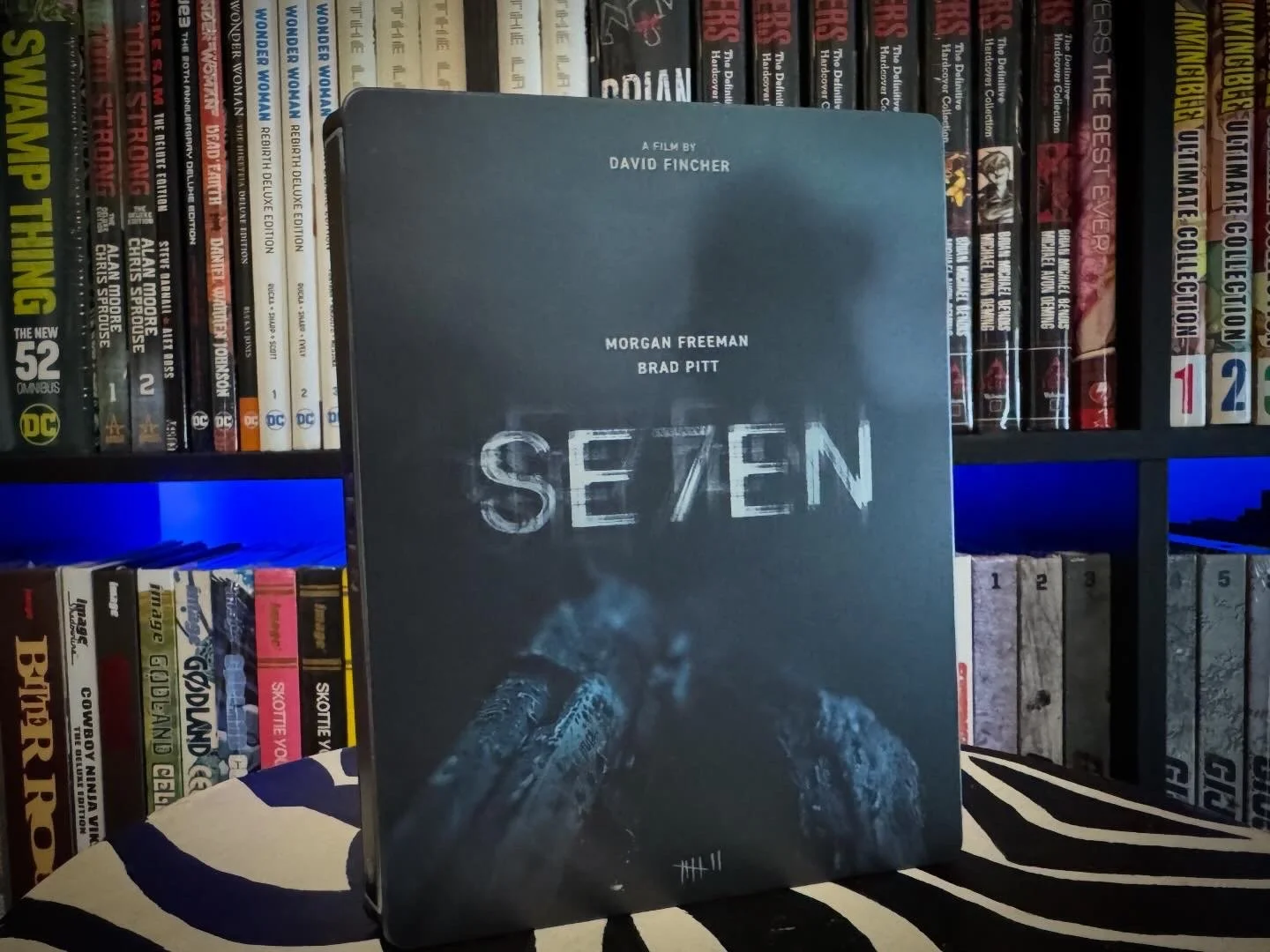
I don’t think it’s hyperbole to say that SE7EN is one of the most influential movies of the last 30 years, aesthetically and narratively. It’s a movie that exists between two eras of the crime drama. The first being the Carter/Regan/Bush period of cat and mouse thrillers that permeated the late 70s-thru-90s, often presented as Cop-aganda like Lethal Weapon, Black Rain, and Dirty Harry. The later being the post 9/11 monoculture shift in which it became faux pas to question authority in media. SE7EN begins a relatively short-lived era of heady and disturbing procedurals that reflect the dejected, post-Bush/Gulf War grunge of a displaced generation. Films like Training Day, Bone Collector, Copy Cat, and a slew of others in this 5-6 year period before the landscape shifted towards patriotic nationalism as a balm for misplaced anxiety (a side of freedom fries, anyone?).
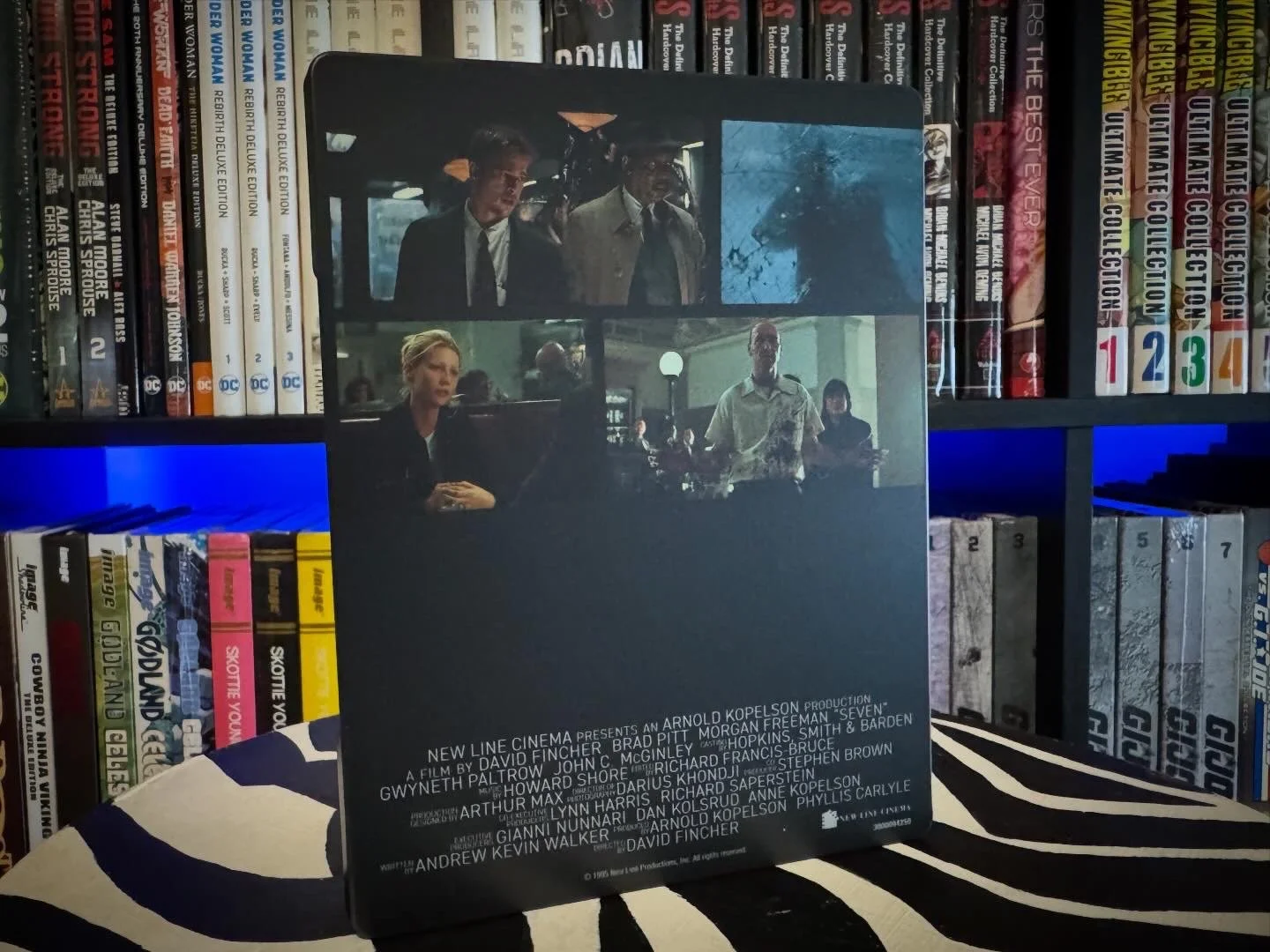
Directed by David Fincher (fresh off his directorial debut of the poorly received Alien3 — which he would later disown as a part of his filmography) and written by Andrew Kevin Walker, SE7EN was inspired by Walker’s experience moving form the suburbs to New York City in the late 1980s. It’s the story of Detective Mills (Brad Pitt) and Det. Lieutenant Somerset (Morgan Freeman), two men at polar opposites of their professional journeys, having to come together to find a serial killer before they can finish their macabre masterpiece. Mills’ brash and callous hunger for action is juxtaposed against Somerset’s decades-worn malaise. Somerset can’t be bothered to teach Mills, let alone help him and his wife,Tracy (Gwyneth Paltrow) settle in the big city. Somerset just wants to finish out his last week without incident—but life has other plans.
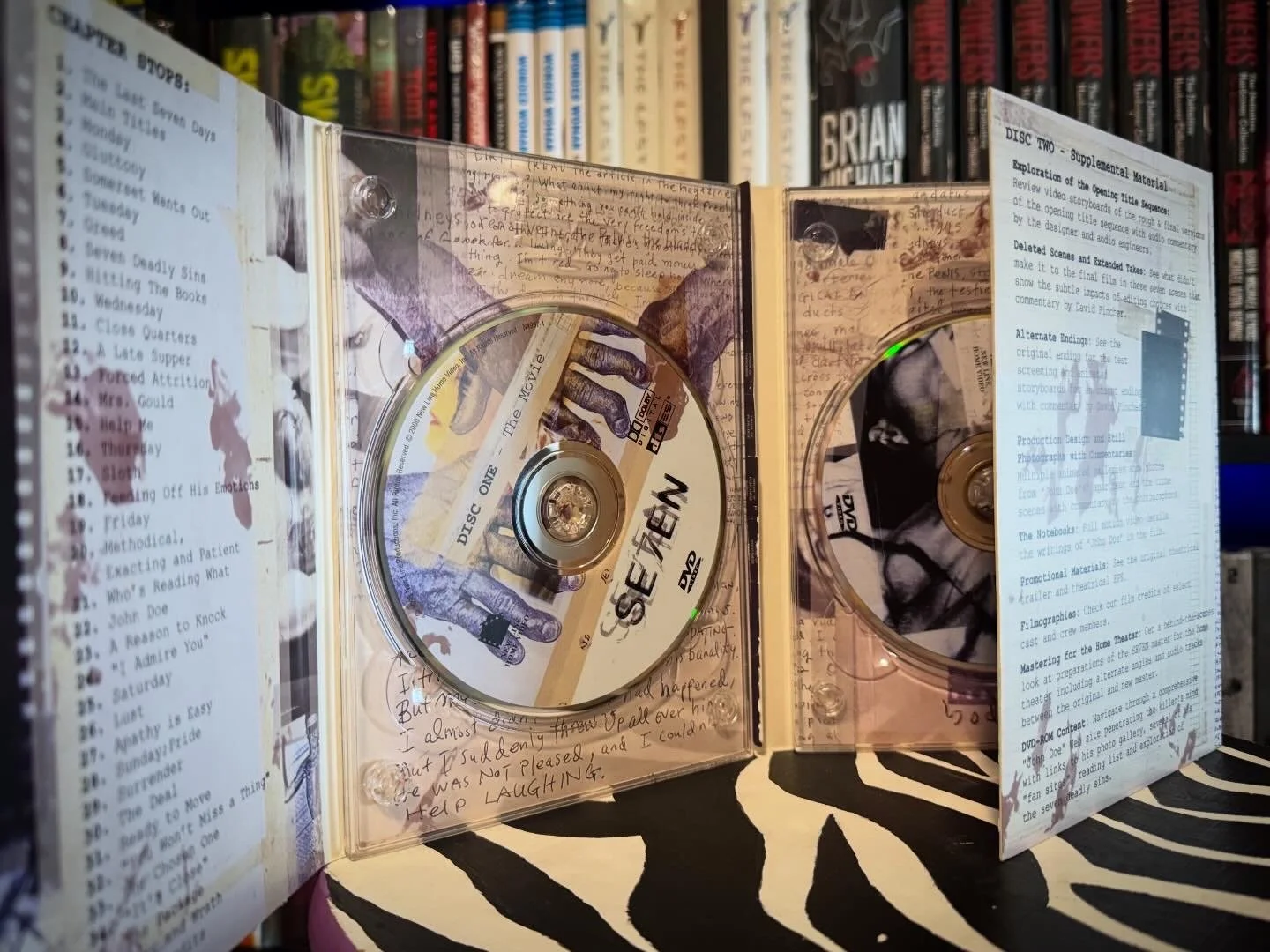
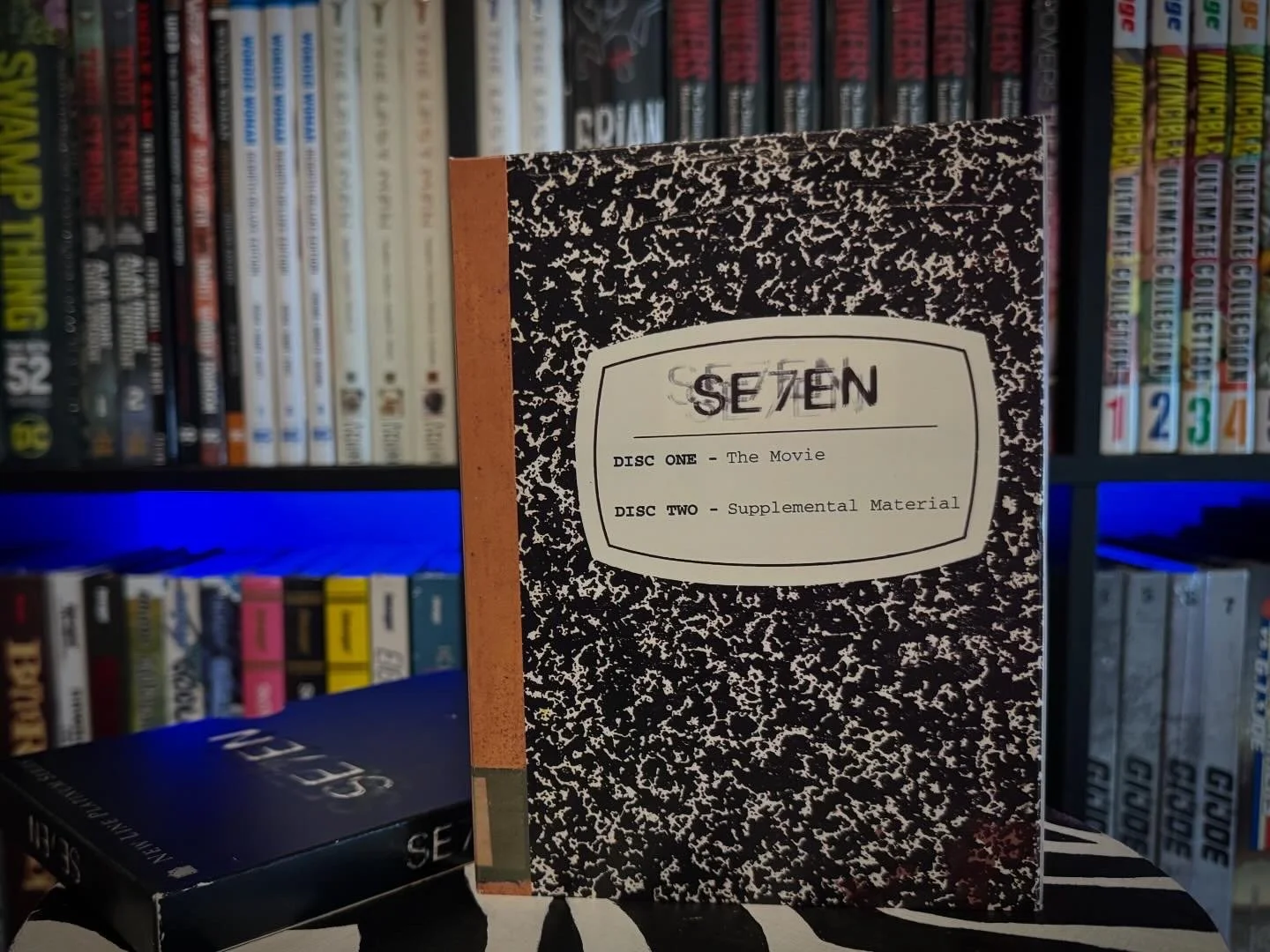
SE7EN posits a world where there are no pure heroes or clean endings, simply those of us that survive and how best we can mitigate damage. This, along with its technical perfection and rock solid performances, is why I think it still feels prescient after 30 years.
This past March, my wife and I had the opportunity to see the 4K restoration in IMAX and we were both riveted. I have seen this movie at least a dozen times and I found myself finding even more layers, tucked deeply into the shadows that Fincher refuses to light. From the quiet metronome opening to the backwards credits, soundtracked to David Bowie’s “The Hearts Filthy Lesson,” this movie is almost mathematically designed to evoke maximum dread from every pore.
I don’t think this movie could be made today. Not for any reason related to content, but because of how it so neatly fits into a time and place. Pre-broadband internet and smartphones; post-blind hero worship and joyful resolutions. It’s a movie that can only happen once and then get mimic’d for a couple of decades before the next era arrives. The only thing that bums me out is that I’m not sure that next era has happened yet and a dark tale like this still feels… relevant.
If you’ve never seen it, close this browser window and watch it at maximum volume, in the dark. If you haven’t seen it in years… do that anyway.